Contractors
Construction Debris Disposal Buffalo
A practical guide to construction and demolition debris disposal for Buffalo contractors, including scheduled dumpster swap-outs and New York C&D debris rules.
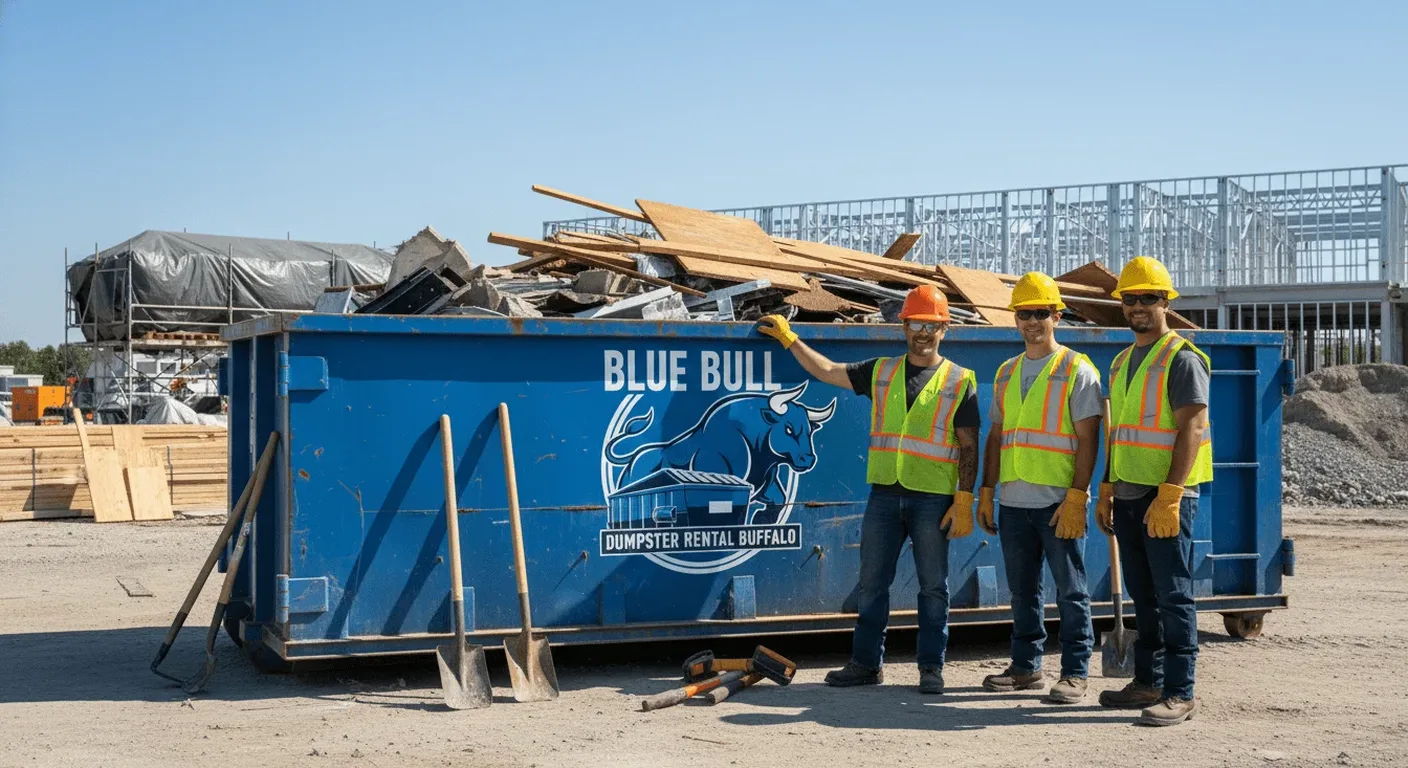
Contractors don't need a sales pitch on why debris management matters — a job site with nowhere to put waste slows down every trade working on it. What Buffalo contractors actually need is a dumpster partner that shows up on schedule, handles the weight without drama, and understands how New York treats construction and demolition debris differently from a standard household load. Here's how we approach it.
Construction and Demolition Debris Is Its Own Category
New York regulates construction and demolition — commonly shortened to C&D — debris separately from household solid waste under its Part 360 series of regulations. That distinction exists because C&D material often includes a mix of wood, drywall, masonry, metal, and other materials that get processed and separated differently than mixed household trash. For a general remodel generating a mix of drywall, wood scraps, and old fixtures, this usually isn't something you need to think about beyond knowing it's handled correctly. For larger demolition or teardown projects, it's worth understanding the category your project falls into — our guide to what can go in a dumpster in New York covers the accepted and prohibited materials list in more detail.
Scheduled Swap-Outs for Active Job Sites
Most residential and light commercial jobs work fine with a single container that stays on site for the duration. Bigger jobs — a full home renovation, a commercial build-out, a multi-phase demolition — are a different story, and that's where a scheduled swap-out plan earns its keep. Instead of one container sitting full for days waiting on an ad hoc pickup call, we coordinate a recurring pull-and-replace schedule matched to your project's actual pace of debris generation, so a full container never becomes the bottleneck holding up your crew. Tell us your project timeline and trade sequence up front and we'll build the swap schedule around it rather than making you call every time a container fills up.
Weight Limits and Heavy Material
Construction debris is often denser than household waste, and a few materials in particular push weight limits fast: concrete, brick, block, and other masonry; roofing material; and soaked or waterlogged debris after exposure to rain or snow. If your project is generating concrete or masonry specifically, our concrete and heavy debris service is built around that material rather than treating it like a standard mixed load, which keeps the container within its weight allowance instead of maxing out halfway through the job. Flag heavy material types when you book so we can put the right container and weight expectation in place from the start rather than adjusting mid-project.
Demolition Projects Need Their Own Plan
A full or partial demolition generates volume and weight on a different scale than a renovation, and it often comes with its own regulatory steps — demolition permits, and if any digging is involved for foundation or utility work, a mandatory call to Dig Safely New York at 811 before work starts. Our demolition debris service and our 40-yard containers are built for this scale of project — see our dumpster permits guide for how permitting and right-of-way placement interact with a demolition timeline.
Historic Renovation Projects
Buffalo's older housing stock brings its own wrinkle to construction debris. Renovating a century-old home in a neighborhood like Elmwood Village or North Buffalo often means encountering plaster and lath instead of drywall, old flooring layered over decades, and building materials that are heavier and more labor-intensive to remove than in a newer home. Our historic home renovation debris guide covers what to expect when a job site is a hundred-plus-year-old structure rather than a newer build.
| Project Type | Typical Container | Key Consideration |
|---|---|---|
| Kitchen or bath remodel | 15 or 20-yard, single container | Standard mixed C&D debris |
| Whole-home renovation | 20 or 30-yard, scheduled swap-out | Recurring pickup matched to trade sequence |
| Concrete or masonry removal | Dedicated concrete/heavy debris container | Weight limit, not volume, is the constraint |
| Full demolition | 40-yard, multiple pulls | Permits and Dig Safely New York 811 call if digging is involved |
Winter Job Site Scheduling
Contractors working through a Buffalo winter deal with an added layer of logistics: snow accumulation, plowed-in access, and shorter daylight hours can all affect how reliably a container can be delivered, repositioned, or pulled on schedule. If your job spans the winter months, building a little slack into the swap-out schedule and confirming site access stays clear is worth the extra planning, especially on tighter urban lots with limited street parking.
Built for Contractors, Not Just One-Off Jobs
We work with general contractors, remodelers, and demolition crews across Buffalo and Erie County on both single-container jobs and multi-month projects with a recurring swap schedule. Explore our construction dumpster rental and roll-off dumpster rental services, or call (716) 274-8073 to set up a swap-out schedule for your next job. Visit our contact page to get started, and check our FAQ page for more on how commercial and contractor accounts work.
Need a container in Buffalo or anywhere in Erie County? Call (716) 274-8073 and describe the job. We will name the size, the flat rate and a delivery slot — often the same day. No forms, no waiting on an email.